
Lectures
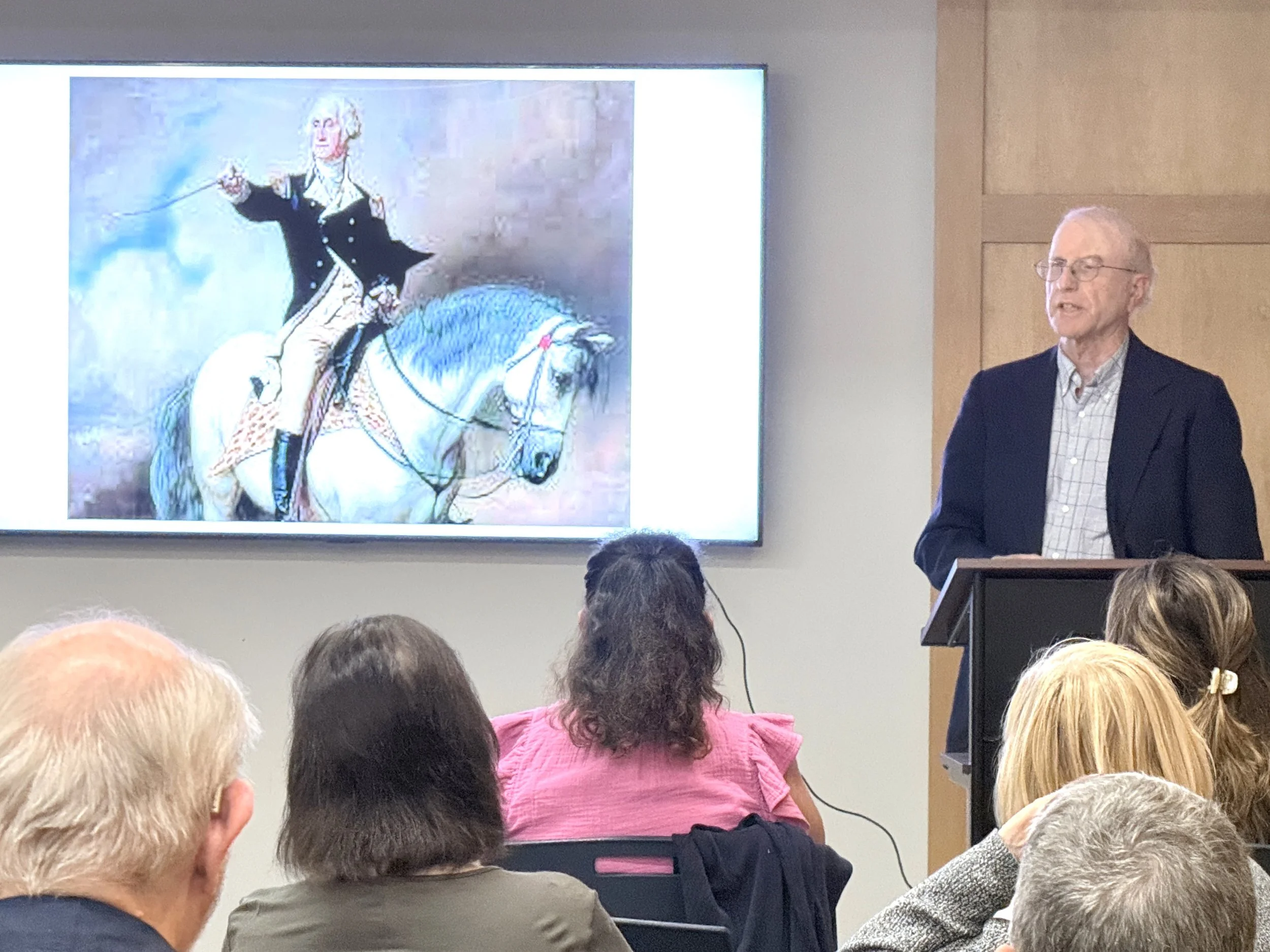
Here's details on the 13 lectures I'm booking now.
For more details on booking a lecture, email me at billbleyer@gmail.com
If you want to join the mailing list for upcoming lectures, complete the form below.
-
Robert Barnwell Roosevelt, uncle of President Theodore Roosevelt, was a prominent member of the illustrious family that played an important role in New York City and beyond starting in the 17th century. He was a pioneering conservationist who influenced his nephew to promote that cause. He was a crusading social reformer, newspaper editor, author and Congressman. But his flagrant disregard of social norms so scandalized his extended family that relatives refused to mention him for generations. A PowerPoint lecture covers the life of a man who in many ways was even more interesting than Theodore Roosevelt.
-
A PowerPoint lecture based on my new book of the same title. Learn about Theodore Roosevelt Birthplace, where the future president grew up with three siblings and doting parents and first became interested in nature and public service. Also hear the story of Roosevelt House, the twin townhouse built by Sara Roosevelt for her son Franklin and his wife Eleanor and where the three lived until FDR and Eleanor moved into the White House.
-
A PowerPoint lecture on the largest battle of the American Revolution, a defeat that could have spelled the end of the Continental Army in 1776, and the subsequent British occupation and hardships it caused for Long Island residents until the end of the conflict in 1783. Long Island was the last place occupied by the British during the Revolution.
-
A PowerPoint lecture about the 1840 fire and sinking in Long Island Sound that claimed the lives of all but four of the up to 150 people on board. The survivors escaped by using cotton bales as life rafts with one drifting for 40 hours in subfreezing weather before landing in Riverhead. The disaster became a milestone in journalism history because young lithographer Nathaniel Currier rushed to make an image of the fire for the New York Sun, which put out extra editions using the illustration, one of the first times a daily newspaper had an illustration with a breaking news story. The loss of the Lexington also led to an important Supreme Court decision and helped lead to tougher safety regulations for steamboats.
-
Learn about prominent Long Island shipwrecks in a lecture by historian, author and retired Newsday reporter Bill Bleyer. The PowerPoint lecture will include maritime disasters from the Prins Maurits carrying colonists to what would become Delaware, HMS Culloden wrecked at Montauk during the American Revolution, the Mexico and Bristol carrying immigrants during the early 1800s, the fire that destroyed the steamship Lexington in 1840 – Long Island Sound’s worst calamity – to the sinking of the USS San Diego in World War I and the loss of the tugboat Gwendoline Steers in a 1962 winter storm.
-
Learn the true story of the Culper Spy Ring from former Newsday reporter Bill Bleyer, author of George Washington’s Long Island Spy Ring: A History and Tour Guide. History enthusiasts have long been fascinated by the operation of the Long Island-based Culper Spy Ring during the American Revolution, especially since the airing of the television series Turn. Over the years, there have been many legends, such as the role played by Anna Strong’s clothesline, and speculations about how the spies operated to support George Washington’s Continental Army. This PowerPoint presentation separates facts from fiction and details the ingenious operation of the intelligence network that helped the Patriots win the war.
-
Listen to a PowerPoint lecture by historian, author and former Newsday reporter Bill Bleyer to learn why pirates like Captain Kidd were attracted to Long Island at the turn of the 18th century and how a visit by Kidd to Gardiners Island led to him dying on the gallows in London. And learn why Long Island was so attractive to bootleggers during Prohibition that the Atlantic Ocean off the South Shore became known as Rum Row and was frequented by bootleggers like William “The Real McCoy” McCoy who supplied gangsters like Al Capone and Dutch Schultz.
-
A PowerPoint lecture that covers from the Native Americans who hunted whales offshore from canoes, to the first whaling companies in America in Southampton, to the rise of industrial-scale whaling in Sag Harbor, Greenport and Cold Spring Harbor, to the famous whaler Mercator Cooper and his trip to the closed society of Japan, to the demise of the industry from the Gold Rush, the Civil War and the discovery of oil in Pennsylvania.
-
A PowerPoint lecture that covers the development of submarines and torpedoes, the landing of Pan Am Clippers in Port Washington, the world’s most innovative whaling captain, and more.
-
A PowerPoint lecture that begins with the country’s first amphibious landing on Plum Island, the British blockade including the wreck of HMS Culloden, and the Meigs and other whaleboat raids; submarine warfare and the wreck of the British 22-gun sloop-of-war Sylph during the War of 1812; Confederate raiders capturing Union shipping just offshore during the Civil War; the sinking of the only American capital warship in World War I off Fire Island; and U-boats dropping off spies and attacking commercial vessels during World War II.
-
A PowerPoint lecture that covers how the Roosevelt family began to visit Oyster Bay during the Civil War and Theodore Roosevelt built his dream house at Sagamore Hill where he hosted political guests like Henry Cabot Lodge and cultural luminaries like novelist Edith Wharton. Roosevelt spent his final years happily at Sagamore Hill, and after his death in 1919 the house was preserved by his widow, the Theodore Roosevelt Association and eventually the National Park Service.
-
A PowerPoint lecture that covers how shipwrecks offshore dating from colonial times prompted construction of the first lighthouse on Fire Island in 1826; the inadequacies of that lighthouse that led to construction of a new taller tower in 1858; the development of improved lighthouse illumination apparatus including the Fresnel lens; the Fire Island lightships that were anchored offshore to augment the new lighthouse; how the lighthouse was shut down by the Coast Guard at the end of 1973 and replaced by a light on the water tower at Robert Moses State Park; how the structures on the closed site deteriorated and the Fire Island Lighthouse Preservation Society was formed in 1982 to restore the property and re-lit the tower in 1986; how the original Fresnel lens was brought back from Philadelphia and displayed in a new building in 2011; and the society’s future plans for bringing back additional artifacts for display.
-
A PowerPoint lecture that covers the patriotism and pacifism that followed the outbreak of the war, Lincoln’s visit to Long Island, local soldiers, efforts on the home front, postwar memorials to the soldiers and more.